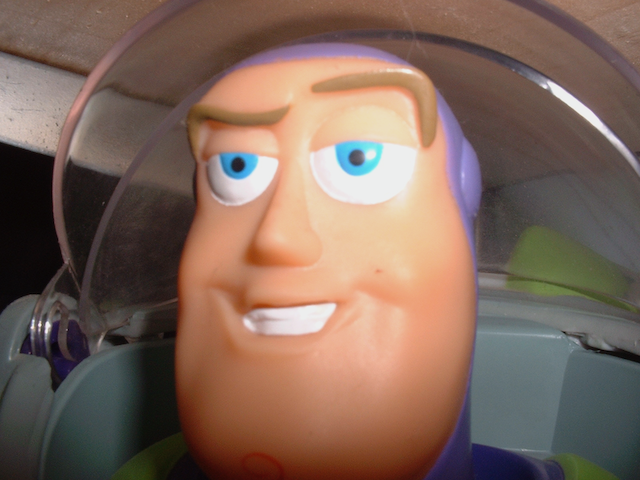
When I was cleaning out my basement, I found my talking Ed Grimley doll, a very old toy from the 80s with a pull string. When you pull the string, it says something that Martin Short’s character would say like “I’m totally mental I must say!”. Today, thirty-some years later, it still works. It talks a little fast, but overall it works. The same goes for my Talking Buzz Lightyear from 1995. It’s actually fully functional thirty-one years later. This made me think about the connected toys my kids have had: those toys that use the internet, an app, or some type of forced login in order to deliver their full value.
I think connected toys create obligations to children that companies routinely abandon, and I’m not sure anyone planned for that because no one asked families. I have two children who were small during the 2010s, and as a parent, connected toys were sold to our family on the promise of smarter play, personalization, and toys that would grow more sophisticated over time. These toys weren’t cheap. They almost always carried a premium price, or were bundled into products that didn’t quite make sense.
When things are more expensive, you tend to assume there will be more durability and more value. Sometimes emotional design is part of the pitch too. If you remember the child companion Jibo, or Cognitoys Dino, you remember that these toys simply turned off one day leaving some children incredibly upset from the loss. Like those products, there were two toy lines in particular that were very meaningful to my family and just went away.
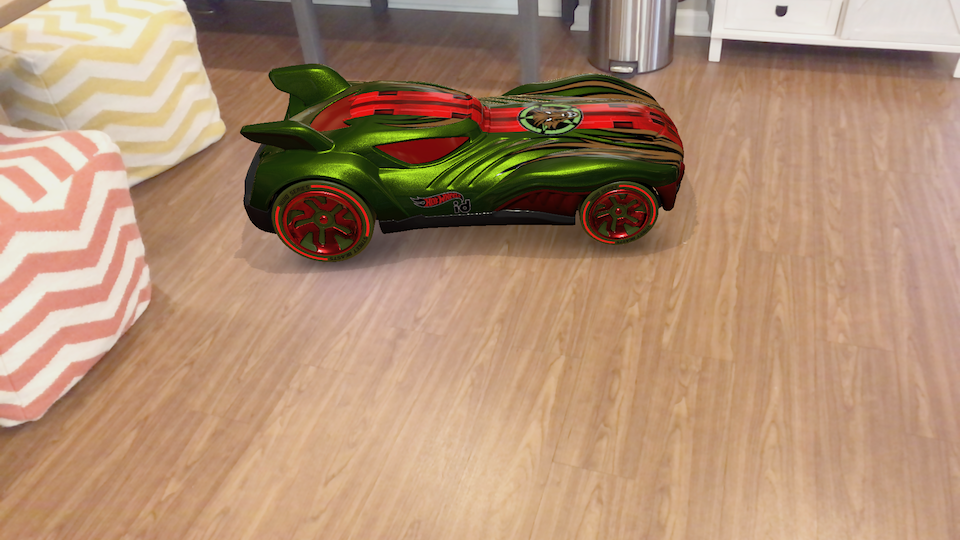
An Augmented Reality photo of one of our HotWheels ID cars placed in our living room.
The first was the Hot Wheels ID system. These were smart Hot Wheels cars that appeared to use near-field communication. Each car was unique, and when you placed it on the special track with the app open, it would tell you which car it was and let you record stats: how many laps it had run in its lifetime, what its fastest lap was. It also had video games you could bring your collection into. I’m not sure anyone was sitting around thinking “I really want my Hot Wheels cars to be smart,” but I thought it was a neat feature. And more importantly, even if you never used that feature, the cars still worked as Hot Wheels cars. They were never broken when the system went down. That’s actually a meaningful distinction, because not every connected toy failed so elegantly.
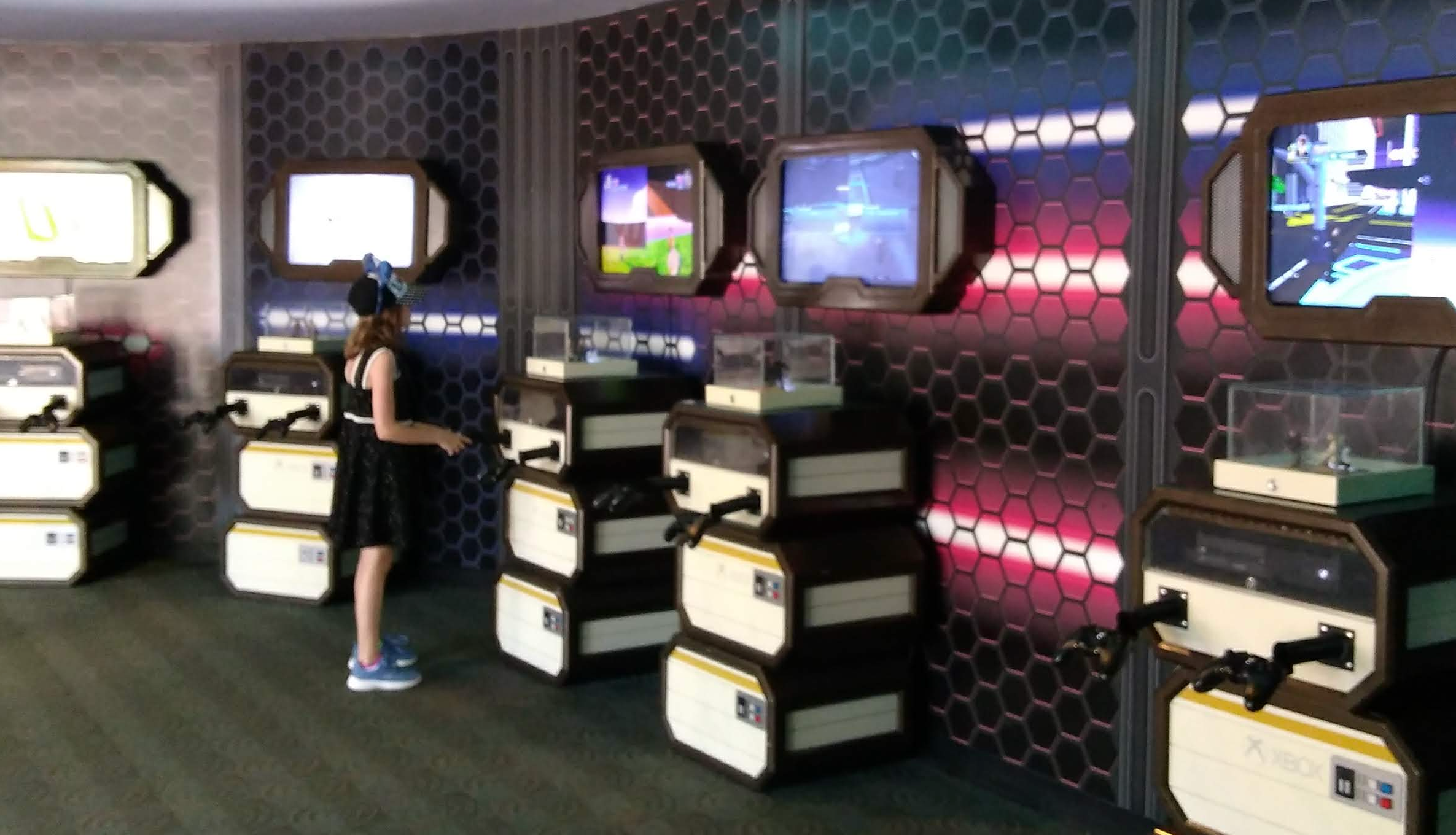
One of my kids plays Disney Infinity at Disney World long after the servers shutdown.
The other toy system, which was much more of a video game, was Disney Infinity. Disney Infinity was my family’s favorite game experience when my kids were younger. We loved it because there were levels to play and stories drawn from movies, Marvel, Star Wars, and Pixar, but you could also build your own levels. We did this constantly. As a family, I could build something and the kids could play it; the kids could build something and I could play it. It was a genuinely wonderful way to experience a game together.
Then it shut down. Not only did it shut down, but Disney canceled toys that were already in production, leading to a secondary market for unreleased figures. I was actually able to find one through some dumpsters in China. But more tragically, the digital component, the connected worlds we built, the levels shared with other players, began to disappear as the servers went offline. Certain features in the builder stopped working because they required server authentication that no longer existed. The plastic figures are still around and will be for hundreds of years. Kids can still find them at garage sales. But they have no real use beyond being display pieces. After families may have spent hundreds of dollars on different components, the game simply went dark. We still own our Disney Infinity sets, and we keep one PlayStation 3 alive specifically so we can turn it on if we want to. There is also a PC version, but it isn’t as complete as the console versions were.
I see this as a real problem for kids in the future. Think about all of the connected toys children have now that, when pulled out of a box in thirty years, simply won’t work. My Ed Grimley doll is degrading gracefully. Our Disney Infinity experiences are essentially over, and once the PlayStation 3 finally dies, they will be completely over. I think this is a kind of loss we don’t yet have good language for. What will tomorrow’s adults think of when they remember these toys? Can the brands that have survived forty or fifty years, now becoming smart and connected, survive going forward as we keep switching off different versions of themselves?
I really wonder whether co-design could have helped. Including families, children, and caregivers as part of the design process could have changed conversations around sunset planning, data collection, and longevity expectations. Why did the Hot Wheels ID system absolutely need an app? Why did it need a login? And if you read the fine print in many connected toy instruction booklets, there is often a date, typically only three years out, indicating how long the app will be supported. Three years is not the lifespan of your favorite toys. In that way, the expiration date is hidden. You don’t find it until you open the box.
There is some reason for hope. The new Lego Smart Bricks offer a different model. They don’t connect to the internet; they connect to each other through their own local networking protocol. Nothing will disappear because nothing is connecting to a server somewhere. I’m not thrilled by the non-replaceable battery, but as many toy enthusiasts on YouTube have demonstrated, batteries are something that can be overcome. More importantly, if a Smart Brick stops working, it’s still a brick. It still connects to other bricks. The graceful degradation is built in.
From a policy perspective, we need meaningful disclosure around sunsetting. Families should know, before purchase, what happens when the servers go dark and how much of the experience is destroyed. And from a design perspective, I believe co-design as a practice could genuinely change how these products are made. What would it have looked like to involve families upstream?
I still love my old toys. My Transformers, G.I. Joe, Star Wars, He-Man, all of those objects that gave me joy as a kid are still there. And my kids do still have toys that will work in forty years: the American Girl Dolls, the My Little Ponies, the Hot Wheels cars. But a large portion of what we did together as a family won’t be accessible to them. It is really imperative that we treat children’s relationships with technology as something worth designing with them, and not just for them.